What if philanthropy adopted more “trusted partners?” How would a broader acceptance of that philosophy simplify and change the daily work of our team? How much less time, work and stress would that reduce for the front-line nonprofits who do the heavy lifting?
Our community foundation has been moving in this direction for the last few years as we try to simplify and streamline the sometimes unnecessarily burdensome paperwork, policies and procedures our industry often invents and imposes.
In late 2025 we began focusing our attention on the needs of one of our trusted partners that provides housing shelter for women and children. Our support began with a bridge loan to help them navigate some short-term cash management struggles. However, their greater need was more than $200,000 in facility upgrades and renovations. Our program team and donor relations team began a personal and focused approach to fully understanding the obstacles they faced, and then began connecting some of our closest donors with the opportunity to make a lasting impact. Within a relatively short time-frame we had secured all of the funding they needed. No grant applications. No committee reviews. Just simplified and streamlined support for a critical partner.
Another example, just this week our program team awarded almost $30,000 in grants to seven local food pantries to help improve their capacity. These seven small organizations are among our Trusted Partners and as such, their application consisted of a very simple one-page request. We don’t need an audit, or annual report, or 990 to make these decisions.
These grants were made possible by our friends at the Michigan Health Endowment Fund, who in late 2025 reached out to us (among others around the state) who they consider to be their Trusted Partners. They then just asked for a very simple request back to them and within just a couple of weeks they sent us a generous grant. The concept of Trusted Partners can work within philanthropy just as well.
So now you’re wondering what our due diligence process and selection criteria looks like for us to determine who is a trusted partner. It’s not complicated. And while we don’t use a strict one-size fits all approach, we look for partners who have a clear and defined mission and purpose. We don’t like “mission creep.” They share our values and beliefs in doing what’s right and treating all people with dignity and respect. They have appropriate financials based on their size and capacity and they have stable leadership, whether that’s one paid staff or a fully volunteer board and structure.
Their governance structure should fit their organizational structure and purpose. They can clearly share their financial data, although we have to accept that a budget from a large organization with significant capacity will look dramatically different than the Excel spreadsheet from a very small organization. We visit them at their location and we know each other on a first-name basis. We trust each other.
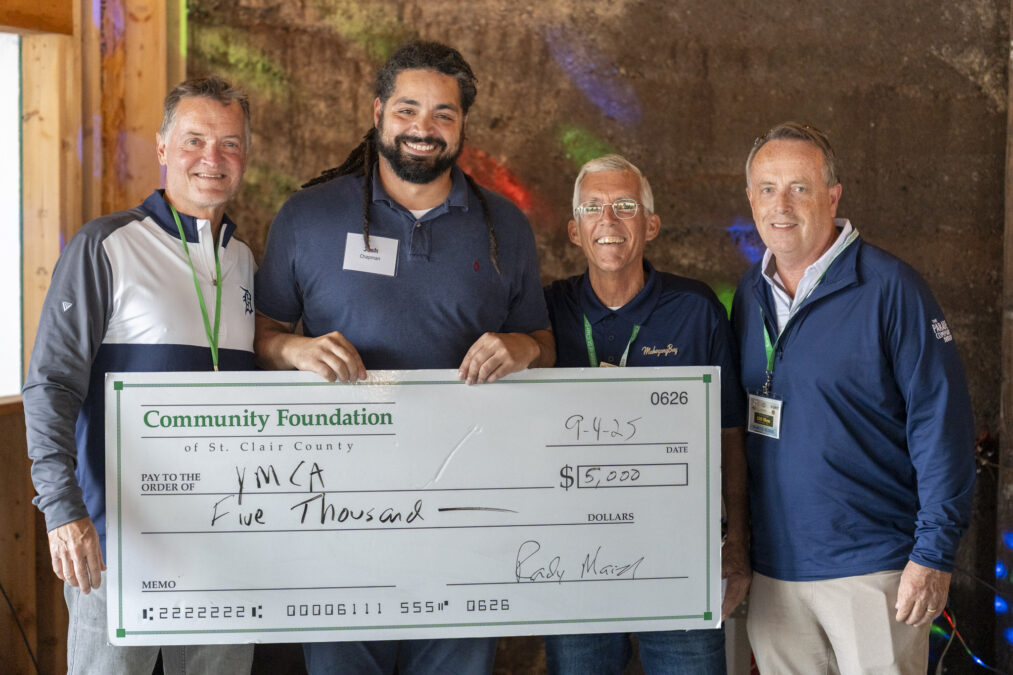
Trusted partners may be entire school districts such as our friends at Port Huron Schools, or other large anchor organizations such as our YMCA or Regional Educational Service Agency (RESA). They may be a local unit of government. Our friends and partners in Marine City, Memphis, Emmett or Port Huron are very closely aligned with us on many fronts, especially placemaking and regional trails. Some partners are very small, modest nonprofits with few or no paid staff, such as the food pantries we support. Others are fairly new and operate with more passion than strict policies, procedures and formal documentation, such as our friends at Kind Human 4 Human Kind.
And perhaps one final characteristic of our Trusted Partners that closely aligns with our beliefs – they get stuff done. In the book Traction by Gino Wickman, he quotes his dad who said, “It is less important what you decide than it is that you decide.” He adds that “more is lost by indecision than by wrong decisions.”
Philanthropy doesn’t need to fund perfection. We should be funding partners who we trust to do their best to fulfill a distinct purpose, and when possible, we should be significantly reducing the barriers to entry for them to access our philanthropic resources.