Shared from the Council of Michigan Foundations’ “The Download”

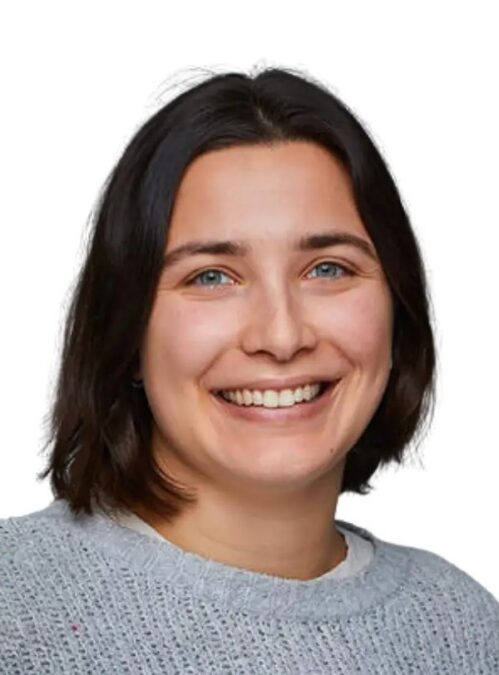
In this CMF Community Voices blog, Ellie Wilson, graduate fellow for the Michigan Governor’s Office of Foundation Liaison, shares her learnings around how philanthropy can help build the capacity of communities to access and effectively use public funding.
This summer I had the incredible opportunity to serve as the graduate fellow for the Michigan Governor’s Office of Foundation Liaison (OFL). Created in 2003 at the suggestion of Michigan philanthropic leaders, OFL is a long-standing, nonpartisan infrastructure organization established to serve the needs of communities in Michigan, particularly those most marginalized. The office identifies and brokers innovative funding partnerships and strategic collaborations between the executive branch of state government and philanthropy.
As a graduate fellow, I experienced all the amazing work OFL does. From long-term plays on existing community efforts and burgeoning state work related to Community Violence Intervention work (CVI) to real-time tracking of HR1 implementation, I was able to lend a hand with all the office does to support Michiganders. Getting access to conversations deep in the philanthropic sector, I learned the importance of OFL and their ability to connect and coordinate across the state.
My main project for the duration of my fellowship was to investigate philanthropy’s role in supporting Michigan communities’ access to public dollars. Across the state, some jurisdictions are unable to apply for, receive, and implement public funding due to a myriad of reasons, including a lack of sufficient staffing, infrastructure, experience, revenue, or trust in government. I identified these jurisdictions as “low capacity,” and through stakeholder engagement across the philanthropic and government sectors, identified potential strategic interventions to best support them.
My research found that the state government and Michigan philanthropies are already doing incredible work around local capacity building efforts. Thus, my final report elevates current capacity-building practices to best support Michigan’s communities, thereby giving foundations a path to consider. The three main investment strategies I presented were to fund, convene, and advocate across all geographical scales (from local jurisdiction to statewide):
- Fund operational and overhead costs, including but not limited to full-time employees, consultants for grant writing support, or physical infrastructure.
- Convene and connect those who have been successful in capacity building, facilitating information sharing and regional collaboration.
- Advocate and support innovation for more equitable grantmaking practices at the state level.
My research was heavily informed by interviews I conducted with philanthropic leaders across the state. I talked to more than 20 individuals, getting to learn about their work in capacity building and how they best support Michigan communities in need. One example I would like to highlight is the work of the Ralph C. Wilson, Jr. Foundation (RCWJRF) and the Community Foundation of St. Clair County.
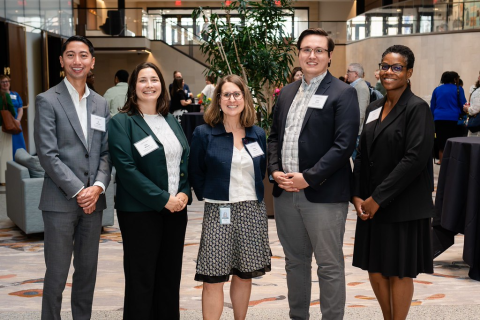
St. Clair comes to this work with strong local relationships, an existing commitment to rural communities, and credibility. Flexible support from RCWJRF then gave St. Clair additional capacity to build on those strengths and respond to locally identified needs. RCWJRF’s support took several distinct forms, each with its own purpose: a capacity grant, a rural fellow, leverage funds, and funding for rural recreation work. For example, the recreation work builds on St. Clair’s existing relationships with rural municipalities, including work with local jurisdictions on recreation plans, which many state grants require. They have also created an amazing resource that helps rural communities identify where they are in the path to funding readiness. Greater access to state and other outside resources is an important direction of this work, and one St. Clair is actively pursuing, though it is still an emerging opportunity.
This is just one example of the many ways philanthropy across Michigan is already supporting community capacity building and exploring better access to state funding. I presented my research at CMF’s Rural Funder Peer Community webinar, sharing what I learned to hopefully inform others’ investment strategies.
I am deeply grateful to OFL and CMF for the opportunity to conduct and present this research. I am even more grateful to OFL for this important professional experience. As a second-year Masters of Public Policy student, I am hoping to enter the world of philanthropy once I graduate! The opportunity to learn from top philanthropic actors, including the team at OFL, is something I will never forget, and I will take with me everything I have learned.
Want more?