By Randy Maiers
Twenty years ago this summer our Community Foundation began an ambitious collaboration to help revitalize a neighborhood and bring more single-family housing to the south side of Port Huron. Looking back on the complexity of it now, with all of the moving parts and obstacles, I’m honestly a bit surprised we pulled it off. Perhaps a healthy bit of naivete was actually what we needed.
Back in 2006 I had never heard the term “Impact Investing” or “Mission Related Investing” and our foundation certainly didn’t have abundant and unrestricted assets. What we did have, and what we leaned into, was our history dating back to the late 1940’s and the courage and culture to be bold. Our Foundation’s first project back then, which still stands proudly today, was Memorial Stadium in Port Huron which honored the local lives lost in WWI and WWII. Talk about bold, a football stadium!
Equally impressive was that our partners on the Oak Crest Homes project: Acheson Foundation, City of Port Huron, Port Huron Housing Commission, Economic Opportunity Committee (now Community Action Agency), Regional Educational Service Agency (RESA), and the Michigan State Housing Development Authority – were all equally willing to be bold and take a calculated risk.
To be fair, while this would turn out to be our largest and perhaps most complicated investment at the time, we weren’t new to this game. In the few years prior we had purchased and developed a new art incubator (Studio 1219), a home for homeless teens and had begun the Community Renaissance Program around Woodrow Wilson Elementary School.
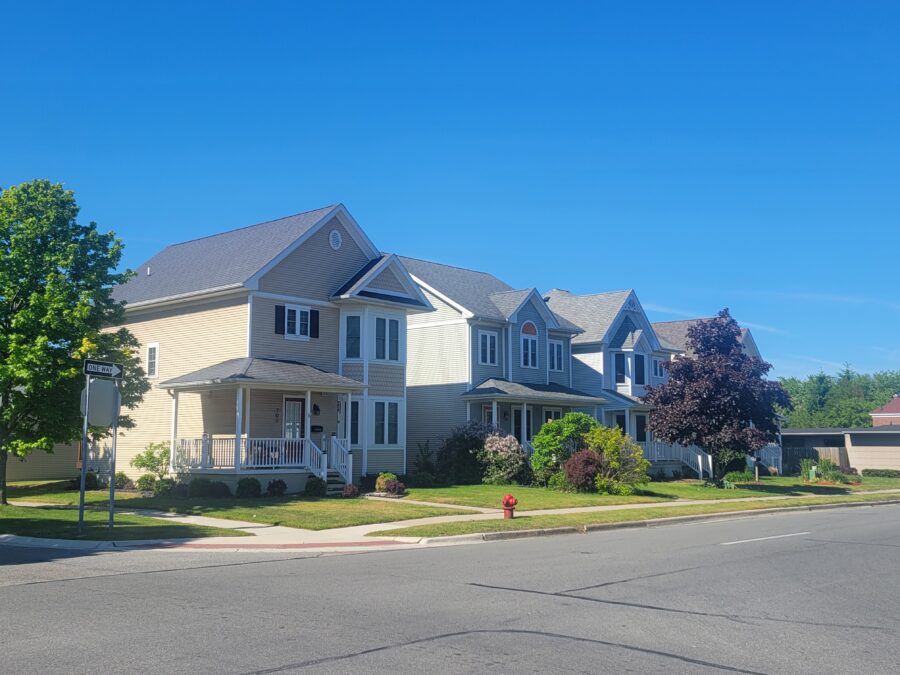
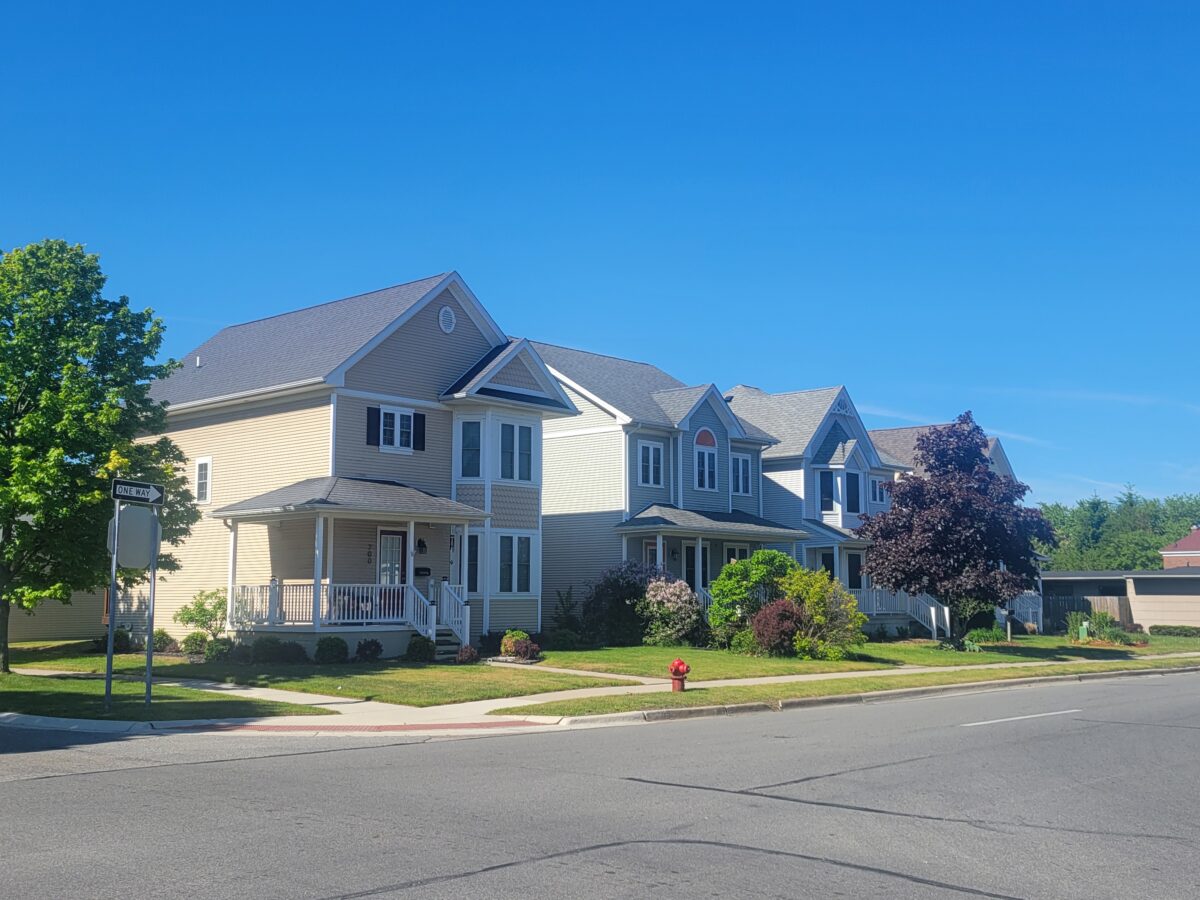
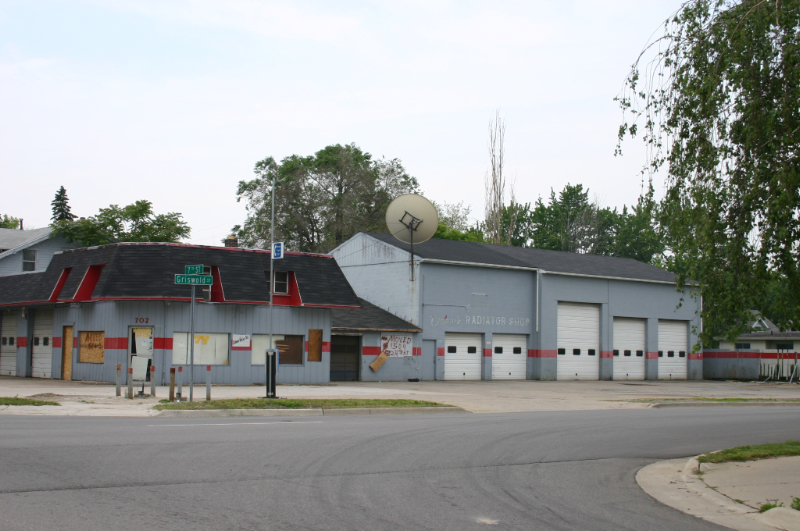
Yet the vision for Oak Crest Homes was far more complex: we would buy up almost two square blocks along the main corridor leading into the City, which was the site of an auto repair facility. We would design and build a new 13-home mini neighborhood, all owner-occupied homes with front porches, sidewalks, garages in the rear and common space.
To be fair, I don’t honestly recall whose idea it was. I do however remember being inspired by some of the other community foundations around Michigan that I had benchmarked and learned from, especially the Community Foundation for Muskegon County. In one word, “bold.”
Our first partner, the James C. Acheson Foundation, certainly knew what bold philanthropy looked like. Once they were on board with the first $1 million investment, there was no doubt we’d eventually succeed. Our Foundation’s role was more behind the scenes organizing the funding and financing and partners. After we directly purchased the two square blocks and had the land cleared, we donated it all to the Community Action Agency, which then managed the entire construction and eventual sales of the homes.
Oak Crest is just a few blocks south of our offices and I drive by them on a regular basis. They still look great. I don’t see ‘for sale’ signs very often in this little neighborhood.
In the years that followed our foundation would continue to push the boundaries of Mission Related Investments. The Blue Water River Walk, by far our largest and most complicated investment would follow less than a decade later. We’ve owned restaurants, museums, provided loans and mortgages, and built a downtown courtyard and parking lot.
Back in 2006 there wasn’t a housing crisis like we have today. Homes were certainly more affordable for the average American family. That’s not the case today. So we’re in the early stages of exploring another kind of housing development, inspired in part by the current trends in pocket neighborhoods and the theories of Strong Towns and Escaping the Housing Trap. Something, or many things, need to change in the housing continuum. This is a lane that philanthropy can do well in – helping lift-up and advance new ideas and theories around what it means to address the housing crisis. I’m eager to see where this work leads us.